
Setting financial goals is one of the best ways to build long-term financial security. Your financial priorities change as you move through different stages of life. What matters in your 20s may be very different from what you focus on in your 40s or after retirement.
By setting realistic goals for each stage, you can manage your money more effectively, prepare for unexpected expenses, and work toward a secure future.
In this guide, you’ll learn practical financial goals for every stage of life and tips to achieve them.
What Are Financial Goals?
Financial goals are specific money-related objectives you want to achieve within a certain period. They help you plan how to earn, save, spend, invest, and protect your money.
Financial goals can be:
- Short-term (within 1 year)
- Medium-term (1–5 years)
- Long-term (more than 5 years)
Having clear goals makes it easier to stay focused and measure your progress.
Why Are Financial Goals Important?
Financial goals help you:
- Build healthy money habits
- Reduce unnecessary spending
- Save for important milestones
- Prepare for emergencies
- Reduce financial stress
- Stay motivated
- Achieve long-term financial independence
Without clear goals, it’s easy to spend money without a plan.
Financial Goals in Your Teens
The teenage years are a great time to develop smart financial habits.
Common goals
- Learn basic money management
- Open a savings account
- Create a simple budget
- Understand the difference between needs and wants
- Save part of your allowance or income
- Learn about investing and financial planning
Building these habits early creates a strong financial foundation.
Financial Goals in Your 20s
Many people begin their careers during this stage, making it the ideal time to establish good financial habits.
Important goals
- Create a monthly budget
- Build an emergency fund
- Pay off high-interest debt
- Start investing early
- Improve your credit score
- Save for major purchases
- Learn basic investment concepts
Why it matters
The earlier you start saving and investing, the more time your money has to grow.
Financial Goals in Your 30s
Your responsibilities often increase during your 30s.
You may be buying a home, starting a family, or advancing your career.
Suggested goals
- Increase retirement savings
- Save for a home purchase
- Build education savings for children
- Increase investment contributions
- Purchase appropriate insurance
- Reduce outstanding loans
- Grow multiple income sources
This is also a good time to review your long-term financial plan.
Financial Goals in Your 40s
Your focus often shifts toward wealth building and financial stability.
Recommended goals
- Increase retirement investments
- Pay down mortgage debt
- Build a diversified investment portfolio
- Update estate planning documents
- Review insurance coverage
- Eliminate unnecessary expenses
- Prepare for children’s higher education
Regular financial reviews become even more important during this stage.
Financial Goals in Your 50s
Retirement planning becomes a higher priority.
Goals to consider
- Maximize retirement savings
- Reduce outstanding debt
- Increase emergency savings
- Estimate retirement expenses
- Review investment risk
- Prepare healthcare savings
- Update your financial plan
The closer you are to retirement, the more carefully you should manage your finances.
Financial Goals After Retirement
Even after retirement, financial planning continues.
Important goals
- Manage retirement income wisely
- Maintain a monthly budget
- Preserve investment capital
- Plan for healthcare expenses
- Reduce unnecessary financial risks
- Review estate plans regularly
- Leave a financial legacy if desired
The goal is to maintain financial security throughout retirement.
Examples of Short-Term Financial Goals
Short-term goals are usually completed within one year.
Examples include:
- Save for an emergency fund
- Pay off credit card debt
- Build a monthly budget
- Reduce unnecessary expenses
- Save for a vacation
- Purchase essential household items
- Start an investment account
These goals are often the first step toward larger financial objectives.
Examples of Medium-Term Financial Goals
Medium-term goals usually take one to five years.
Examples include:
- Save for a house down payment
- Buy a car
- Start a business
- Complete higher education
- Build investment savings
- Pay off personal loans
- Upgrade professional skills
Medium-term planning requires consistent saving and budgeting.
Examples of Long-Term Financial Goals
Long-term goals often take more than five years.
Examples include:
- Achieve financial independence
- Build retirement savings
- Buy a home
- Create passive income
- Fund children’s education
- Grow investment wealth
- Leave an inheritance
These goals usually require disciplined investing and long-term planning.
SMART Financial Goals
A good financial goal should follow the SMART method.
It should be:
- Specific – Clearly define the goal.
- Measurable – Track your progress.
- Achievable – Make it realistic.
- Relevant – Match your financial priorities.
- Time-bound – Set a deadline.
Example
Instead of saying:
“I want to save money.”
Say:
“I will save $5,000 for an emergency fund within 18 months by saving $280 every month.”
This approach makes your goal easier to follow.
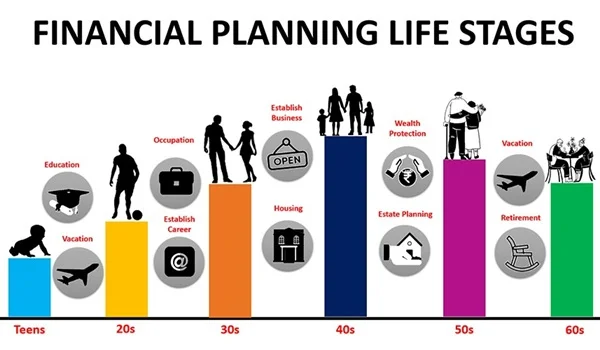
Common Financial Goals by Life Stage
| Life Stage | Common Financial Goals |
| Teens | Learn budgeting, start saving, understand money management |
| 20s | Build emergency fund, invest early, reduce debt |
| 30s | Buy a home, grow investments, protect family finances |
| 40s | Increase wealth, reduce loans, save for education and retirement |
| 50s | Prepare for retirement, strengthen savings, reduce financial risk |
| Retirement | Manage income, preserve wealth, plan healthcare expenses |
Tips for Achieving Your Financial Goals
Follow these practical strategies:
- Create a realistic monthly budget.
- Save before you spend.
- Track your expenses regularly.
- Avoid unnecessary debt.
- Build an emergency fund.
- Invest consistently.
- Review your financial goals every year.
- Increase savings whenever your income grows.
- Stay patient and disciplined.
Small improvements over time often produce significant financial results.
Common Mistakes to Avoid
Many people struggle to achieve financial goals because of avoidable mistakes.
Not Setting Clear Goals
Vague goals are difficult to achieve.
Ignoring a Budget
Without a budget, spending can easily exceed income.
Delaying Savings
Starting early gives your money more time to grow.
Taking on Too Much Debt
High debt reduces your ability to save and invest.
Never Reviewing Your Goals
Life changes, and your financial goals should change too.
Frequently Asked Questions
Why should financial goals change with age?
As your income, responsibilities, and priorities change, your financial needs also change. Updating your goals helps keep your financial plan relevant.
How many financial goals should I have?
Focus on a few important goals at a time. Trying to achieve too many goals simultaneously can make it harder to stay consistent.
Should I save or invest first?
Most financial experts recommend building an emergency fund before making long-term investments. Once you have emergency savings, you can begin investing according to your goals.
How often should I review my financial goals?
Review your financial goals at least once a year or whenever you experience a major life event, such as a new job, marriage, buying a home, or retirement.
Can financial goals change over time?
Yes. Financial goals should evolve as your circumstances, income, and priorities change. Adjusting your goals is a normal part of financial planning.
Final Thoughts
Financial goals provide a clear direction for managing your money at every stage of life. Whether you’re saving for your first emergency fund, buying a home, planning for your children’s education, or preparing for retirement, setting realistic and measurable goals can help you make smarter financial decisions.
Remember that financial success doesn’t happen overnight. By creating a plan, saving consistently, investing wisely, and reviewing your goals regularly, you can build lasting financial security and move closer to achieving the future you envision.