
Every business, whether it’s a startup or an established company, relies on proper documentation to operate smoothly. Business documents help you manage finances, meet legal requirements, track operations, and make informed decisions.
Keeping important records organized can save time, reduce legal risks, and make it easier to grow your business. In this guide, we’ll cover the essential business documents every company should maintain and why each one matters.
Why Are Business Documents Important?
Business documents serve as official records of your company’s activities, finances, and legal obligations. They help ensure transparency, improve decision-making, and protect your business during audits, disputes, or inspections.
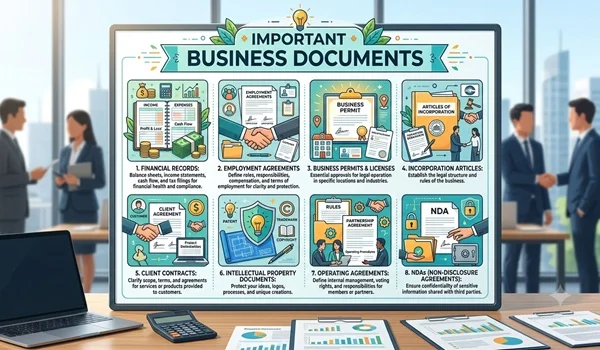
Well-maintained documents can also make it easier to secure loans, attract investors, and comply with government regulations.
Benefits of Maintaining Business Documents
Proper documentation helps businesses:
- Meet legal and tax requirements
- Track income and expenses accurately
- Improve financial planning
- Protect business interests
- Simplify audits and inspections
- Build trust with investors and customers
- Support long-term business growth
- Business Registration Documents
Every legally operating business should maintain its registration documents.
These records prove that your business is officially registered and authorized to operate.
Common registration documents include:
- Business registration certificate
- Certificate of incorporation
- Business licenses
- Trade licenses
- Tax registration certificates
Keep both digital and physical copies in a secure location.
- Business Plan
A business plan acts as a roadmap for your company.
It outlines:
- Business objectives
- Target market
- Products or services
- Marketing strategy
- Financial projections
- Growth plans
Review and update your business plan regularly as your company evolves.
- Financial Records
Accurate financial records are essential for monitoring business performance.
Important financial documents include:
- Income statements
- Balance sheets
- Cash flow statements
- Profit and loss reports
- General ledger
- Expense reports
These records help you understand your company’s financial health.
- Tax Documents
Tax compliance is an important part of running a business.
Maintain documents such as:
- Tax returns
- Tax payment receipts
- Tax registration numbers
- Payroll tax records
- Sales tax records (where applicable)
Organized tax records make filing easier and reduce the risk of penalties.
- Bank Statements
Business bank statements provide a clear record of financial transactions.
They help you:
- Reconcile accounts
- Monitor cash flow
- Detect unauthorized transactions
- Prepare financial reports
Keep statements for all business bank accounts.
- Invoices and Receipts
Invoices and receipts document every sale and purchase.
These records help with:
- Accounting
- Tax filing
- Customer payment tracking
- Expense verification
Maintain both outgoing invoices and supplier receipts.
- Contracts and Agreements
Contracts define the rights and responsibilities of all parties involved.
Common examples include:
- Client agreements
- Supplier contracts
- Partnership agreements
- Service agreements
- Non-disclosure agreements (NDAs)
- Lease agreements
Review contracts carefully before signing and store signed copies securely.
- Employee Records
If your business has employees, maintain organized personnel records.
These may include:
- Employment contracts
- Job descriptions
- Payroll records
- Leave records
- Performance evaluations
- Training certificates
- Attendance records
Protect employee information by limiting access to authorized personnel.
- Payroll Records
Payroll documentation helps ensure employees are paid correctly.
Maintain records of:
- Salary payments
- Bonuses
- Overtime
- Tax deductions
- Benefits
- Payroll reports
Accurate payroll records also support tax compliance.
- Insurance Policies
Business insurance protects your company against unexpected losses.
Keep copies of:
- General liability insurance
- Property insurance
- Workers’ compensation insurance
- Professional liability insurance
- Vehicle insurance (if applicable)
Review policies before renewal dates.
- Intellectual Property Documents
If your business owns unique products, logos, or inventions, maintain records related to intellectual property.
Examples include:
- Trademark certificates
- Copyright registrations
- Patent documents
- Licensing agreements
These documents help protect your business assets.
- Meeting Minutes
Document important decisions made during business meetings.
Meeting minutes typically include:
- Date and time
- Participants
- Topics discussed
- Decisions made
- Action items
They provide a useful record for future reference.
- Customer Records
Customer information helps improve service and business relationships.
Maintain records such as:
- Customer contact details
- Purchase history
- Service agreements
- Customer feedback
- Support requests
Follow applicable privacy laws when collecting and storing customer data.
- Supplier Information
Supplier records help ensure smooth business operations.
Include:
- Supplier contracts
- Contact information
- Payment terms
- Delivery schedules
- Purchase history
Having organized supplier records makes procurement easier.
- Inventory Records
Businesses that sell products should maintain accurate inventory records.
Track:
- Stock levels
- Product purchases
- Product sales
- Damaged inventory
- Reorder levels
Good inventory management helps prevent shortages and overstocking.
- Asset Register
An asset register keeps track of everything your business owns.
Examples include:
- Computers
- Office furniture
- Machinery
- Vehicles
- Equipment
Record purchase dates, values, maintenance history, and depreciation where applicable.
- Business Policies and Procedures
Internal policies help employees understand company expectations.
Examples include:
- Employee handbook
- Code of conduct
- Attendance policy
- Leave policy
- Workplace safety procedures
- Data security policy
Review these documents periodically to keep them up to date.
- Compliance and Regulatory Documents
Depending on your industry, you may need additional compliance records.
Examples include:
- Safety inspection reports
- Environmental compliance documents
- Industry certifications
- Regulatory approvals
Maintaining these documents helps avoid legal issues.
Business Documents Checklist
| Document | Purpose |
| Business Registration | Proves legal existence |
| Business Plan | Guides company growth |
| Financial Statements | Tracks financial performance |
| Tax Records | Supports tax compliance |
| Bank Statements | Monitors transactions |
| Invoices & Receipts | Records sales and expenses |
| Contracts | Defines legal obligations |
| Employee Records | Manages workforce information |
| Payroll Records | Tracks employee payments |
| Insurance Policies | Protects against risks |
| Intellectual Property Documents | Safeguards business assets |
| Meeting Minutes | Records important decisions |
| Customer Records | Improves customer management |
| Supplier Records | Supports procurement |
| Inventory Records | Manages stock efficiently |
| Asset Register | Tracks company assets |
| Company Policies | Standardizes operations |
| Compliance Documents | Meets legal requirements |
Best Practices for Managing Business Documents
Follow these tips to keep your records organized:
- Store both physical and digital copies.
- Back up important files regularly.
- Use secure cloud storage.
- Organize documents into clearly labeled folders.
- Restrict access to confidential information.
- Review records periodically.
- Dispose of outdated documents securely when allowed by law.
Common Mistakes Businesses Make
Avoid these documentation mistakes:
- Losing important contracts
- Mixing personal and business records
- Failing to back up digital files
- Keeping outdated information
- Poor document organization
- Ignoring document retention requirements
- Not updating employee records
Frequently Asked Questions
How long should a business keep important documents?
The retention period depends on local laws and the type of document. Tax records, contracts, and financial statements often need to be kept for several years. Check the legal requirements in your country or consult a qualified professional.
Should small businesses maintain the same documents as large companies?
Yes. While the volume of paperwork may differ, small businesses should still maintain essential records related to registration, finances, taxes, employees, and contracts.
Is it better to store documents digitally or physically?
Using both is usually the safest approach. Digital copies make access easier and protect against physical damage, while original paper documents may still be required for certain legal purposes.
How often should business documents be updated?
Review financial records monthly, update employee records when changes occur, and revise business plans and policies at least once a year or whenever significant business changes take place.
What happens if a company doesn’t maintain proper business records?
Poor record-keeping can lead to tax issues, legal disputes, financial errors, compliance problems, and difficulty obtaining loans or attracting investors.
Final Thoughts
Maintaining essential business documents is more than just an administrative task—it’s a key part of building a well-managed and legally compliant company. Organized records improve efficiency, support better decision-making, and help your business respond confidently to audits, financial reviews, and unexpected challenges.
Whether you’re launching a startup or managing an established business, creating a reliable document management system today can save time, reduce risks, and support sustainable growth in the future.