
Many people spend a large part of their day sitting at a desk, working on a computer, studying, travelling or watching television. Long periods of sitting can make it difficult to maintain an active lifestyle, particularly when work and household responsibilities leave little time for exercise.
The good news is that improving your daily routine does not always require major changes. Small habits such as taking movement breaks, walking more, maintaining a comfortable workstation and staying hydrated can make everyday life more active.
Take Regular Movement Breaks
One of the simplest habits is to avoid sitting continuously for several hours.
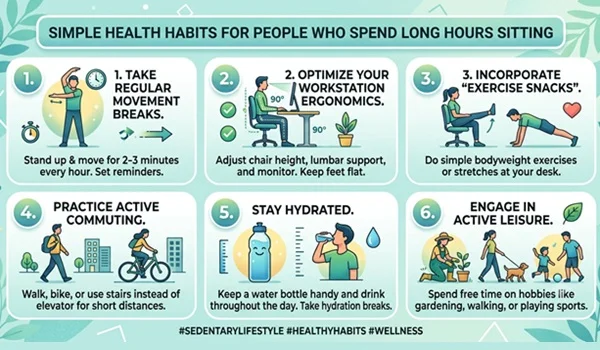
Stand up periodically, walk around the room or stretch for a few minutes before returning to your work. If you work from home, use natural breaks such as getting water or completing a small household task as opportunities to move.
The goal is to break up long periods of uninterrupted sitting.
Walk During Short Breaks
Instead of spending every work break on your phone, use some of the time for walking.
A short walk around the office, building or home can add movement without requiring a separate workout session. If you have several breaks during the day, these short periods can gradually add up.
Use the Stairs When Practical
If you normally use a lift for a short distance, consider taking the stairs when it is comfortable and safe to do so.
This is a simple way to include more physical activity in your daily routine without setting aside additional exercise time.
Start gradually if you are not used to climbing stairs.
Walk While Taking Phone Calls
If your work allows it, consider walking during phone calls that do not require you to remain at your desk.
This can be particularly useful for people who spend several hours on calls. A few minutes of walking during multiple conversations can help reduce the amount of time spent sitting.
Improve Your Sitting Position
A comfortable workstation can make long periods of desk work easier on the body.
Keep your monitor at a comfortable height, position your keyboard and mouse so that your arms can remain relaxed, and use a chair that provides suitable support.
Avoid remaining in exactly the same position for hours. Even a good sitting position should be combined with regular movement.
Stretch During the Workday
Gentle stretching can be incorporated into short breaks.
Simple movements for the neck, shoulders, wrists, back and legs can help you move after spending a long time at a desk.
Stretch gently rather than forcing a joint or muscle into an uncomfortable position. If a particular movement causes pain, stop and seek appropriate professional advice if the problem persists.
Keep Water Nearby
When you are busy, it is easy to forget to drink water.
Keeping a water bottle on your desk can provide a simple reminder to drink regularly. Getting up to refill the bottle can also create another opportunity to move.
Water is generally the best everyday beverage, while sugary drinks can be limited.
Do Not Eat Every Meal at Your Desk
When possible, step away from your workstation during meals.
Eating away from the computer can provide a mental break and may also encourage you to pay more attention to your food.
Try to eat slowly rather than continuing to work throughout the entire meal.
Add a Short Daily Walk
A daily walk can be a practical way to compensate for some of the inactivity associated with desk-based routines.
You could walk before work, during lunch, in the evening or after dinner. If you cannot find time for one longer walk, divide it into shorter sessions.
The pace and duration should match your fitness level.
Exercise at Home
People who sit for long hours do not necessarily need a gym membership.
Simple home exercises such as squats, wall push-ups, lunges, step-ups and mobility exercises can be included in a routine. Beginners should start at a comfortable level and gradually increase activity.
Even a short workout can be useful when it is performed consistently.
Make Your Commute More Active
If you have some flexibility in your commute, look for safe opportunities to include more walking.
This might mean walking to a nearby transport stop, parking slightly farther away or walking part of the journey where practical.
Do not compromise safety or convenience simply to increase activity.
Spend Less Time Sitting After Work
A desk-based job can sometimes be followed by several more hours of sitting at home.
After work, consider activities that involve movement. Cooking, gardening, cleaning, walking, playing with children or going outside for a short walk can help create a more active evening.
You do not need to avoid television or other seated activities completely. The aim is to balance them with movement.
Make Weekends More Active
Weekends can be a useful opportunity to reduce sedentary time.
Go for a walk, play an outdoor sport, cycle, visit a park or participate in another activity you enjoy. Family activities can make movement more enjoyable and easier to maintain.
Avoid treating the weekend as an opportunity to remain seated for the entire day after a busy working week.
Pay Attention to Sleep
Long working hours and extended screen use can sometimes interfere with sleep.
Maintain a reasonably consistent bedtime and wake-up time, create a relaxing evening routine and reduce unnecessary screen use before bed.
Adequate sleep supports energy and can make it easier to remain active during the day.
Eat Regular, Balanced Meals
People who spend long hours at a desk may rely heavily on tea, biscuits, packaged snacks or food ordered during work.
Instead, try to maintain balanced meals that include suitable sources of protein, vegetables, fruits and grains according to your dietary preferences.
Keeping healthy snacks such as fruit, roasted chana, nuts or curd available can make better choices more convenient.
Set Simple Reminders
When you become deeply involved in work, several hours can pass without movement.
A simple phone, computer or smartwatch reminder can encourage you to stand, stretch or walk periodically.
The reminder does not need to interrupt important meetings or concentrated work. Adjust it according to your schedule.
Build Habits Gradually
Trying to completely change a sedentary lifestyle in one day can be difficult.
Start with manageable habits. For example, take a short walk during one break, stand up regularly and add a few minutes of exercise at home.
Once these habits become comfortable, gradually introduce additional movement.
Listen to Your Body
Long periods of sitting can sometimes be accompanied by stiffness, discomfort or pain.
Do not ignore persistent or worsening symptoms. If pain, numbness, weakness or other unusual symptoms continue, seek advice from a qualified healthcare professional.
Exercise should also be appropriate for your age, fitness level and individual health circumstances.
Conclusion
Spending long hours sitting does not mean you have to accept an inactive lifestyle. Small changes such as taking regular movement breaks, walking during calls, using stairs, stretching, exercising at home and taking a daily walk can help introduce more activity into your routine.
The goal is not to eliminate sitting completely. Instead, break up long periods of inactivity and create more opportunities to move throughout the day. Simple habits that fit naturally into your work and home routine are more likely to become long-term habits.