
Planning meals for an entire week can make everyday cooking easier, reduce food waste and save time. Indian households often prepare different meals depending on the season, region, family preferences and available ingredients. However, creating a weekly menu does not have to be complicated.
A simple meal plan can include familiar homemade dishes such as dal, roti, rice, sabzi, khichdi, poha, idli, dosa, curd and seasonal vegetables. The key is to plan realistically rather than trying to cook an elaborate meal every day.
Why Plan a Weekly Meal Menu?
A weekly meal menu gives you a basic idea of what you will cook each day. This can make grocery shopping easier and reduce the daily stress of deciding what to prepare.
Meal planning can also help households use vegetables, grains, pulses and other ingredients before they spoil. When meals are planned in advance, it becomes easier to maintain variety instead of preparing the same dishes repeatedly.
Start by Checking Your Routine
Before creating the menu, consider your family’s weekly schedule.
Working days may require quick breakfasts and simple dinners, while weekends may allow more time for cooking. If someone has school, office or other regular commitments, meals should be planned around those timings.
There is no need to create a complicated menu for days when everyone is busy.
Create a Basic Meal Structure
A simple Indian weekly menu can be divided into breakfast, lunch, evening snacks and dinner.
Breakfast can include options such as poha, upma, paratha, idli, dosa, besan chilla or vegetable sandwiches.
Lunch can follow a simple combination of dal or another protein-rich dish, vegetables, roti or rice, and curd or another suitable accompaniment.
Dinner can be lighter or similar to lunch depending on the family’s routine and preferences.
Snacks can include fruit, roasted chana, nuts, homemade snacks or other convenient options.
Plan Different Dishes Across the Week
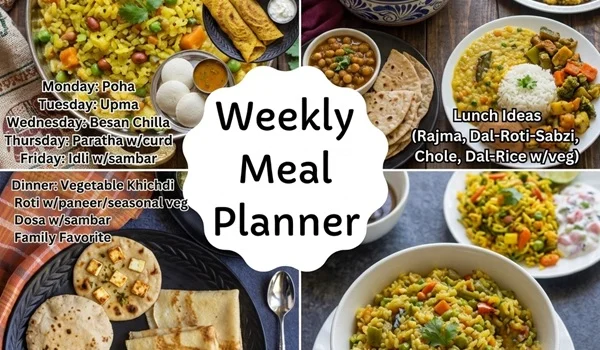
Variety does not mean cooking something completely different every day. Instead, rotate basic ingredients and cooking styles.
For example, dal can be prepared in different ways, while seasonal vegetables can be used in sabzi, pulao or mixed vegetable dishes.
A weekly rotation could look like this:
Monday: Poha for breakfast, dal-roti-sabzi for lunch and vegetable khichdi for dinner.
Tuesday: Vegetable upma for breakfast, rajma-rice for lunch and roti with paneer or seasonal vegetables for dinner.
Wednesday: Besan chilla for breakfast, dal-rice with vegetables for lunch and dosa with sambar for dinner.
Thursday: Paratha with curd for breakfast, chole with roti for lunch and vegetable pulao with raita for dinner.
Friday: Idli with sambar for breakfast, roti-dal-sabzi for lunch and a simple homemade khichdi or soup-based meal for dinner.
Saturday: Dosa or stuffed paratha for breakfast, a family favourite for lunch and a simple vegetable-based dinner.
Sunday: A preferred breakfast, followed by a more elaborate family meal and a lighter dinner.
This is only a sample structure. Meals should be adjusted according to dietary preferences, regional cuisine and household requirements.
Make a Grocery List From the Menu
Once the meals are decided, prepare the grocery list. Divide it into categories to make shopping easier.
Grains and Staples
Keep commonly used staples such as rice, wheat flour, poha, oats, semolina and other grains required by your household.
Pulses and Legumes
Include dal, chickpeas, kidney beans, black gram, green gram and other pulses that your family regularly eats.
Vegetables
Choose a combination of seasonal vegetables and everyday staples. Buying only what is likely to be consumed during the week can help reduce wastage.
Fruits
Select a few fruits that can be used for breakfast or snacks. Seasonal fruits are often convenient choices.
Dairy and Other Foods
Depending on your household preferences, the list may include milk, curd, paneer, eggs or other foods used regularly.
Use Seasonal Ingredients
Seasonal vegetables can add variety to a weekly menu without requiring complicated recipes. Instead of buying the same vegetables every week, rotate them based on availability.
For example, leafy vegetables can be included when readily available, while different gourds, beans, carrots, peas or other seasonal produce can be rotated through the week.
Prepare Some Ingredients in Advance
You do not need to cook the entire week’s food in advance. Preparing a few ingredients can be enough to save considerable time.
You can wash and safely store suitable vegetables, roast ingredients such as semolina, prepare dosa or idli batter when appropriate, and keep commonly used spices organised.
Some households also prepare chutneys, dough or basic gravies ahead of time. However, perishable foods should be stored and refrigerated properly.
Keep Quick Meals for Busy Days
Do not schedule time-consuming recipes on every weekday. Keep simple meals for days when work or other commitments are likely to make cooking difficult.
Poha, upma, khichdi, dal-rice, vegetable pulao, roti-sabzi and chilla can all be useful options depending on your household’s preferences.
Having a few emergency meal ideas can also prevent unnecessary food delivery or last-minute grocery shopping.
Include Leftovers Wisely
Leftovers do not always have to be served in exactly the same form.
For example, leftover dal can sometimes be used with rice or transformed into another suitable homemade preparation. Extra roti can be used to make a simple roll with vegetables or another filling.
The idea is to use food creatively while ensuring that leftovers have been stored safely and consumed within an appropriate period.
Keep One Flexible Day
A weekly menu should not be so strict that one unexpected event ruins the entire plan.
Keeping one or two flexible meals allows you to use leftover ingredients, accommodate changes in schedule or prepare something the family is craving.
This makes the meal plan easier to maintain over the long term.
Make the Menu Suitable for the Whole Family
A good meal plan should consider the people actually eating the food.
Children, adults and older family members may have different preferences. Some people may prefer vegetarian meals, while others may include eggs or other animal-based foods.
Instead of preparing completely separate meals for everyone, use a common base and make small adjustments where practical.
Simple Tips for Better Weekly Meal Planning
Keep a list of family-favourite recipes so you always have ideas available. Avoid planning too many new dishes in one week. Check your kitchen before shopping so you do not buy ingredients you already have.
It is also helpful to repeat successful meals. A weekly menu is meant to make life easier, not create additional pressure.
Final Thoughts
Planning a simple weekly Indian meal menu is mainly about organisation and practicality. Start with familiar dishes, consider your family’s schedule, rotate ingredients, prepare a few things in advance and keep some quick meals available for busy days.
The most effective meal plan is not necessarily the most elaborate one. A simple menu that fits your routine, reduces food waste and helps you cook comfortably throughout the week is far more useful than a complicated plan that is difficult to follow.
Available next action: Create a downloadable DOCX file here in this chat containing the editable prose above