
Consumers have legal rights when they purchase goods or services. If you receive a defective product, poor service, misleading information, or face an unfair trade practice, you may be able to seek a remedy through the consumer dispute redressal system.
This guide explains the general steps involved in filing a consumer complaint in India.
What Is a Consumer Complaint?
A consumer complaint is a formal request made by a consumer seeking relief for a problem related to goods or services purchased for personal use.
Common reasons for filing a complaint include:
- Defective products.
- Poor-quality services.
- Unfair trade practices.
- Misleading advertisements.
- Overcharging.
- Delay in delivery.
- Failure to honor warranty or guarantee terms.
When Should You File a Consumer Complaint?
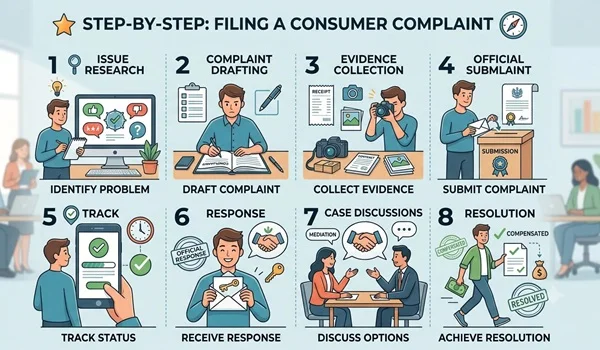
You may consider filing a complaint if:
- The seller refuses to replace or repair a defective product.
- A service provider fails to provide the promised service.
- You are charged more than the displayed or agreed price.
- You suffer financial loss because of unfair business practices.
- Your consumer rights have been violated.
Whenever possible, first try to resolve the issue directly with the seller or service provider.
Step 1: Gather All Relevant Documents
Before filing a complaint, collect documents that support your case.
These may include:
- Purchase invoice or bill.
- Cash receipt.
- Warranty or guarantee card.
- Order confirmation.
- Payment receipt.
- Delivery records.
- Emails or chat conversations.
- Photographs or videos showing the defect.
- Any previous complaint correspondence.
These documents can help establish the facts of your complaint.
Step 2: Contact the Seller or Service Provider
Many disputes can be resolved without formal legal proceedings.
Contact the business and:
- Explain the problem clearly.
- Provide supporting documents.
- Request a reasonable solution, such as:
- Repair.
- Replacement.
- Refund.
- Completion of the promised service.
Keep copies of all communication.
Step 3: Send a Written Complaint
If the issue remains unresolved, send a formal written complaint.
Include:
- Your name and contact details.
- Details of the seller or service provider.
- Description of the product or service.
- Date of purchase.
- Nature of the problem.
- Copies of supporting documents.
- The remedy you are requesting.
A written complaint creates a record of your efforts to resolve the dispute.
Step 4: Wait for a Response
Allow the business a reasonable opportunity to respond.
Many companies have customer support or grievance redressal systems that may resolve the issue before formal proceedings become necessary.
Step 5: File a Consumer Complaint
If the matter is still unresolved, you may file a complaint before the appropriate consumer dispute redressal authority under the applicable consumer protection laws.
Generally, you will need to provide:
- Your personal details.
- Details of the opposite party.
- Facts of the complaint.
- Copies of supporting documents.
- The relief or compensation sought.
Ensure that the information you provide is accurate and complete.
Step 6: Pay the Applicable Fee (If Required)
Depending on the nature and value of the complaint, a filing fee may apply.
The applicable fee and procedure are determined by the relevant rules in force at the time of filing.
Step 7: Attend the Proceedings
After your complaint is accepted, the authority may:
- Notify the opposite party.
- Ask both sides to present their evidence.
- Schedule hearings if required.
- Review the documents and applicable law.
Attend hearings or respond to notices within the prescribed timelines.
Step 8: Receive the Decision
After considering the case, the authority may issue an order.
Depending on the facts and applicable law, possible remedies may include:
- Refund of the purchase amount.
- Replacement of the product.
- Repair of the product.
- Compensation for loss or deficiency in service.
- Removal of defects.
- Other relief permitted under the law.
The outcome depends on the evidence presented and the legal provisions that apply.
Can You File a Consumer Complaint Online?
In many cases, consumer complaints in India can be submitted through official online platforms provided by the government.
The availability of online filing, procedures, and requirements may change over time, so always use official government portals and follow the latest instructions.
Tips for a Strong Consumer Complaint
To improve the quality of your complaint:
- Keep all purchase records.
- Present facts in chronological order.
- Be clear and specific.
- Attach supporting documents.
- Avoid emotional or abusive language.
- Clearly state the relief you are seeking.
Well-organized documentation can make your complaint easier to understand.
Common Mistakes to Avoid
Many consumers weaken their case by:
- Losing invoices or receipts.
- Delaying the complaint unnecessarily.
- Providing incomplete information.
- Filing without supporting evidence.
- Ignoring notices or hearing dates.
- Making false or exaggerated claims.
Providing accurate information is important throughout the process.
Consumer Complaint Checklist
| Task | Why It Matters |
| Keep purchase invoice | Proof of purchase |
| Save payment records | Confirms the transaction |
| Collect photos or evidence | Supports your claim |
| Contact the seller first | May resolve the dispute quickly |
| Send a written complaint | Creates a formal record |
| Keep copies of all communication | Useful if the matter proceeds further |
| File before the appropriate authority | Helps follow the correct legal process |
| Attend hearings if required | Allows you to present your case |
Frequently Asked Questions
Can I file a consumer complaint without a bill?
A purchase bill is one of the strongest forms of evidence. However, other documents such as payment records, order confirmations, emails, or transaction receipts may also help support your claim, depending on the circumstances.
Do I need a lawyer to file a consumer complaint?
Not always. Many consumer complaints can be filed by individuals without hiring a lawyer. However, legal advice may be helpful in complex or high-value disputes.
What remedies can I request?
Depending on the facts of your case and the applicable law, you may seek remedies such as a refund, replacement, repair, compensation, or other relief available under the consumer protection framework.
Should I contact the seller before filing a complaint?
Yes. Attempting to resolve the issue directly with the seller or service provider is generally a good first step and may save time and effort.
Final Thoughts
Filing a consumer complaint is an important way to protect your rights when you receive defective goods, poor services, or face unfair business practices. By keeping proper records, communicating with the seller, gathering evidence, and following the appropriate legal process, you can present your complaint effectively. If the issue cannot be resolved directly, the consumer dispute redressal system provides a legal avenue to seek appropriate relief under Indian law.
Disclaimer: This article is for general informational purposes only and should not be considered legal advice. Consumer laws and procedures may change over time. For advice on your specific case, consult a qualified legal professional or refer to the relevant government authorities.