
Planning your trip in advance can make your journey smoother, less stressful, and often more affordable. From booking transportation to packing your bags, completing important tasks at the right time helps you avoid last-minute problems and enjoy your vacation with confidence.
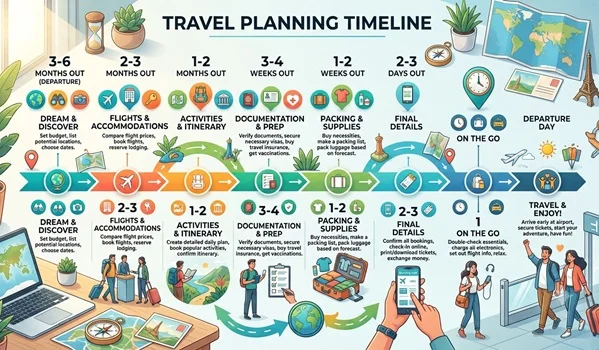
This guide provides a simple travel planning timeline, showing what you should do before your trip and when to do it.
Why Plan Your Trip Early?
Planning ahead can help you:
- Find better prices on transportation and accommodation.
- Secure reservations for popular attractions.
- Avoid last-minute stress.
- Prepare important travel documents.
- Pack more efficiently.
- Handle unexpected changes more easily.
A little preparation can save both time and money.
2–6 Months Before Your Trip
If you’re planning a long vacation or traveling during a busy season, start early.
Choose Your Destination
Think about:
- Your budget.
- Weather conditions.
- Activities you enjoy.
- Trip duration.
- Travel restrictions or entry requirements, if applicable.
Set a Travel Budget
Estimate expenses for:
- Transportation
- Accommodation
- Food
- Local transportation
- Attractions
- Shopping
- Emergency fund
A budget helps you avoid overspending.
Check Travel Documents
Make sure your:
- Passport is valid (if required).
- Visa requirements are understood.
- Government-issued ID is up to date.
Apply for or renew documents early if necessary.
Book Flights or Other Transportation
Booking early may provide:
- Better prices.
- More seating options.
- Convenient travel times.
Compare multiple options before making a reservation.
Reserve Accommodation
Choose accommodation based on:
- Location.
- Safety.
- Cleanliness.
- Guest reviews.
- Budget.
Booking early often gives you more choices.
1–2 Months Before Your Trip
As your departure date gets closer, begin organizing the details.
Plan Your Itinerary
Create a flexible schedule that includes:
- Major attractions.
- Day trips.
- Local transportation.
- Rest time.
Avoid filling every hour with activities.
Buy Travel Insurance (If Appropriate)
Depending on your trip, travel insurance may help cover certain unexpected events, such as:
- Trip cancellations.
- Medical emergencies.
- Lost luggage.
- Travel delays.
Read the policy carefully to understand what is and isn’t covered.
Research Local Information
Learn about:
- Local customs.
- Weather.
- Currency.
- Transportation options.
- Emergency numbers.
Knowing these details helps you feel more prepared.
Arrange Pet or Home Care
If needed, organize:
- Pet care.
- Plant watering.
- Mail collection.
- Home security.
Taking care of these tasks before you leave provides peace of mind.
2–3 Weeks Before Your Trip
Now it’s time to start preparing for departure.
Make a Packing List
Include categories such as:
- Clothing.
- Toiletries.
- Electronics.
- Medications.
- Travel documents.
- Chargers.
A checklist helps reduce the chance of forgetting important items.
Shop for Missing Items
Buy anything you still need, such as:
- Travel-size toiletries.
- Power adapters.
- Comfortable walking shoes.
- Luggage tags.
- Travel organizers.
Avoid waiting until the last minute.
Confirm Reservations
Double-check:
- Flight or train bookings.
- Hotel reservations.
- Tour bookings.
- Car rentals, if applicable.
Save confirmation emails or download them to your device.
1 Week Before Your Trip
Complete the final preparations.
Check the Weather Forecast
Knowing the expected weather helps you pack suitable clothing.
Pack for:
- Rain.
- Heat.
- Cold temperatures.
- Outdoor activities.
Prepare Your Finances
Before leaving:
- Inform your bank if required for international travel.
- Carry an appropriate payment method.
- Keep a small amount of local currency if needed.
- Set aside emergency funds.
Organize Important Documents
Keep documents together in one secure place.
Include:
- Passport or ID.
- Tickets.
- Hotel confirmations.
- Insurance information.
- Emergency contacts.
Store digital copies securely as a backup.
1–2 Days Before Departure
Focus on the final details.
Pack Your Bags
Pack only what you need.
Remember to include:
- Medications.
- Chargers.
- Power bank.
- Reusable water bottle.
- Snacks for the journey.
Leave some extra space for souvenirs.
Charge Your Devices
Fully charge:
- Mobile phone.
- Power bank.
- Laptop.
- Camera.
- Smartwatch or other travel devices.
Download offline maps and entertainment if needed.
Prepare Your Home
Before leaving:
- Lock doors and windows.
- Turn off unnecessary electrical appliances.
- Empty trash bins.
- Set timers for lights if appropriate.
- Adjust the thermostat if needed.
On the Day of Travel
Start your journey with enough time to avoid unnecessary stress.
Before Leaving Home
Make sure you have:
- Passport or ID.
- Wallet.
- Phone.
- Chargers.
- Tickets.
- Luggage.
- Keys.
Arrive Early
Allow extra time for:
- Traffic.
- Parking.
- Security checks.
- Check-in procedures.
Arriving early can make the start of your trip much more relaxed.
After You Arrive
A few simple steps can help you settle in quickly.
- Check into your accommodation.
- Secure your valuables.
- Review your itinerary.
- Locate nearby grocery stores, pharmacies, and transportation.
- Stay hydrated and rest if you’ve had a long journey.
Travel Planning Tips
To make your trip smoother:
- Start planning early.
- Compare prices before booking.
- Keep digital copies of important documents.
- Pack light whenever possible.
- Leave room in your schedule for flexibility.
- Keep emergency contacts easily accessible.
Good planning allows you to enjoy your destination instead of worrying about logistics.
Common Travel Planning Mistakes to Avoid
Many travelers make these mistakes:
- Waiting too long to book transportation or hotels.
- Forgetting to check passport or visa requirements.
- Overpacking.
- Skipping travel insurance without considering the risks.
- Ignoring the weather forecast.
- Planning too many activities in one day.
- Forgetting chargers or medications.
Avoiding these mistakes can make your trip much more enjoyable.
Travel Planning Timeline Checklist
| Time Before Trip | Tasks |
| 2–6 Months | Choose destination, set budget, check travel documents, book transportation and accommodation |
| 1–2 Months | Plan itinerary, research destination, consider travel insurance, arrange home or pet care |
| 2–3 Weeks | Create packing list, buy travel essentials, confirm reservations |
| 1 Week | Check weather, prepare finances, organize travel documents |
| 1–2 Days | Pack luggage, charge devices, prepare your home |
| Travel Day | Carry documents, arrive early, double-check essentials |
Frequently Asked Questions
How early should I start planning a trip?
For major vacations or international travel, planning several months in advance often provides better prices and more choices. Short domestic trips may require less planning, depending on the season and destination.
When should I book flights and hotels?
Booking early can help you access better prices and a wider selection, especially during holidays or peak travel seasons.
Should I make a travel checklist?
Yes. A checklist helps you stay organized and reduces the chance of forgetting important documents, medications, or travel essentials.
What should I do the day before traveling?
Pack your bags, charge your electronic devices, confirm your reservations, organize your travel documents, and prepare your home so you’re ready to leave without rushing.
Final Thoughts
A well-planned trip starts long before you leave home. By following a simple timeline—setting a budget, booking transportation and accommodation early, organizing your documents, packing thoughtfully, and completing final checks before departure—you can reduce stress and avoid common travel problems. Good planning lets you focus on enjoying your journey and making lasting memories instead of dealing with last-minute surprises.