
Signing a contract is often treated as a routine formality. Whether it is a rental agreement, employment contract, loan document, insurance policy, service agreement, property transaction or business arrangement, people may focus mainly on the headline terms and sign without reading the detailed clauses.
However, the fine print can contain some of the most important conditions of the agreement. It may explain what each party is required to do, what happens if someone fails to perform their obligations, how the contract can be terminated and how disputes will be handled.
For Indian individuals and businesses, carefully reviewing these provisions before signing can prevent avoidable disputes and unexpected financial or legal consequences.
What Does “Fine Print” Mean in a Contract?
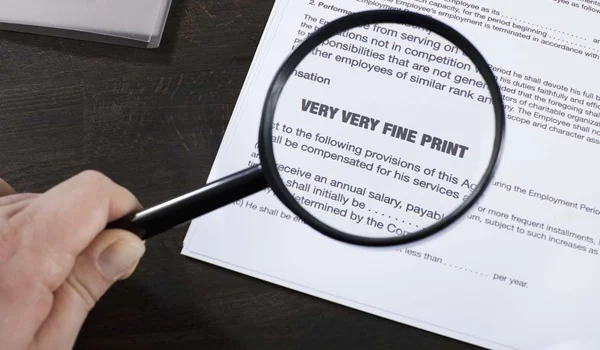
Fine print generally refers to detailed terms and conditions that may not receive as much attention as the main commercial terms.
These provisions can cover:
- Payment obligations
- Contract duration
- Renewal conditions
- Cancellation and termination
- Penalties and interest
- Refund rules
- Notice requirements
- Liability and indemnity
- Confidentiality
- Dispute resolution
- Jurisdiction
- Restrictions on the parties
- Conditions for changing the agreement
The font size itself is not the important issue. The key point is that detailed clauses can have a major effect on the rights and responsibilities created by the contract.
The Contract May Contain More Than the Headline Deal
A person may agree to a service for a particular price or accept a job at a stated salary, but the detailed terms can introduce additional obligations.
For example, a service agreement might mention a monthly fee in the opening section but later contain conditions relating to minimum commitment periods, cancellation charges or automatic renewal.
Similarly, an employment agreement may state a salary but include detailed provisions dealing with notice periods, confidentiality, intellectual property or other employment-related obligations.
Reading the entire document helps you understand the complete arrangement rather than relying only on the terms discussed verbally.
Payment Terms Need Careful Attention
Financial clauses deserve particular attention before signing.
Check:
- The total amount payable
- Payment schedule
- Applicable taxes or additional charges
- Late-payment interest
- Security deposits
- Refund conditions
- Cancellation charges
- Price revision provisions
- Processing or administrative fees
A contract may appear affordable initially but become more expensive because of additional charges described elsewhere.
Before signing, make sure you understand exactly when money becomes payable and what financial consequences may arise if payment is delayed.
Check the Contract Duration and Renewal Clause
The duration of a contract can be just as important as its starting date.
Some agreements automatically renew unless one party gives notice within a specified period. If this clause is overlooked, a person may find that the agreement continues even though they intended to end it.
Always check:
- Start date
- End date
- Renewal period
- Automatic renewal provisions
- Notice period
- Method of giving notice
If the agreement requires written notice through a particular method, follow that requirement carefully.
Understand Termination Conditions
Termination clauses explain how and when the contract can be ended.
Some contracts allow termination for convenience, while others permit termination only after certain conditions are met. There may also be different consequences depending on who terminates the agreement and why.
Before signing, determine:
- Who can terminate the contract
- Whether advance notice is required
- Whether a termination fee applies
- What happens to outstanding payments
- What happens to deposits
- What obligations continue after termination
A contract should not be signed without understanding how you can exit it.
Look for Penalties and Default Clauses
Contracts commonly explain what happens if one party fails to meet its obligations.
These provisions may involve late fees, interest, compensation, suspension of services or termination.
Pay particular attention to clauses using terms such as default, breach, penalty, interest, damages, or liability.
If a provision could create a significant financial obligation, it is worth understanding exactly when it becomes applicable.
Do Not Ignore Indemnity and Liability Clauses
Indemnity and liability provisions can significantly affect financial risk.
An indemnity clause may require one party to compensate another for certain losses, claims or expenses. A liability clause may limit or exclude responsibility for particular types of loss.
These provisions can be complicated and their effect depends on the wording and circumstances. If the financial exposure is significant, obtaining advice from a qualified legal professional before signing can be sensible.
Check the Dispute Resolution Clause
A contract should ideally make clear what happens if the parties disagree.
Look for provisions dealing with:
- Negotiation
- Mediation
- Arbitration
- Court proceedings
- Applicable law
- Jurisdiction
The agreement may specify where disputes must be handled or whether arbitration is required.
This can have practical consequences because a dispute may involve additional costs, travel or professional assistance depending on the agreed procedure.
Read the Notice Clause
Notice provisions are easy to overlook but can become important when a contract needs to be renewed, terminated or enforced.
A contract may specify the address, email address or other method through which official notices must be sent.
If the agreement requires notices to follow a particular process, informal communication may not always have the intended contractual effect.
Check Whether Verbal Promises Are Included
People often rely on statements made during negotiations. The final written contract, however, may not contain everything that was discussed.
Some agreements also contain clauses stating that the written contract represents the complete agreement between the parties.
If an important promise or condition was discussed during negotiations, consider whether it has been properly reflected in the written document before signing.
Do not assume that every verbal assurance will automatically become part of the contractual arrangement.
Be Careful With Blank Spaces and Missing Information
Never sign a contract containing important blank spaces that another party could fill in later.
Check names, addresses, dates, amounts, identification details, property descriptions and other key information carefully.
Also check whether all schedules, annexures and referenced documents have actually been provided.
If the agreement says that certain terms are contained in an attached schedule, you should read that schedule before signing.
Understand Clauses That Continue After the Contract Ends
Some obligations can continue even after an agreement has been terminated.
For example, confidentiality, intellectual-property, payment, dispute-resolution or record-retention provisions may continue for a specified period.
Look for wording that indicates an obligation survives termination or continues after the agreement ends.
This is particularly important for employment, business, consultancy and commercial contracts.
Do Not Sign Under Unnecessary Pressure
Being told that a contract must be signed immediately should not prevent you from understanding what you are agreeing to.
If the document is lengthy or complicated, take reasonable time to review it. Ask questions about provisions you do not understand and request clarification where necessary.
For significant transactions, professional legal review can be worthwhile, particularly when the agreement involves substantial money, property, long-term obligations or considerable liability.
Keep a Copy of the Final Signed Contract
After signing, make sure you receive and safely retain a complete copy of the final agreement.
The copy should include all pages, schedules, annexures and relevant attachments. If the contract is signed electronically, preserve the final version and relevant transaction records.
Avoid relying solely on an unsigned draft or a document that was later changed.
What to Do Before Signing Any Contract
A simple review process can reduce the chances of overlooking important terms:
Read the entire document: Do not stop after the first few pages.
Mark unclear clauses: Note anything you do not understand.
Check financial obligations: Confirm the total cost and possible additional charges.
Review termination rules: Understand how either party can end the agreement.
Check dispute provisions: Know what happens if a disagreement occurs.
Verify personal and commercial details: Make sure names, dates and amounts are correct.
Review attachments: Read every schedule and annexure referred to in the contract.
Ask for changes in writing: If an important term is negotiated, ensure the final document reflects it.
Get professional advice when necessary: Complex or high-value contracts deserve careful legal review.
Final Thoughts
A contract is more than the main deal written at the top of the page. The detailed clauses can determine how the agreement works in practice and what happens when something goes wrong.
Reading the fine print before signing gives you an opportunity to identify unexpected costs, restrictive conditions, termination requirements and potential liabilities while changes are still possible.
For everyday agreements, careful reading and asking sensible questions may be enough. For contracts involving property, substantial money, business interests, employment disputes or significant legal obligations, consulting a qualified lawyer before signing can provide additional protection.
The safest approach is simple: never sign a contract merely because the main terms sound acceptable. Understand the complete document first.