
Good sleep is an important part of a healthy daily routine. Yet busy work schedules, long commutes, household responsibilities, late-night screen use and changing daily commitments can make consistent sleep difficult. Many people try to fix their sleep by making sudden changes, but these are often difficult to maintain.
A sustainable sleep routine is about developing simple habits that fit naturally into everyday life. Consistent sleeping and waking times, a relaxing evening routine, suitable daytime activity and a comfortable sleeping environment can all support better sleep and improved daytime energy.
Set a Regular Sleep and Wake Time
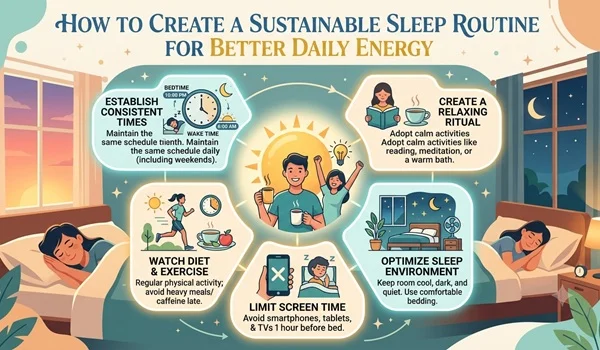
One of the simplest ways to improve your sleep routine is to maintain reasonably consistent sleeping and waking times.
Try to go to bed and wake up at approximately the same time each day. This gives your daily routine greater structure and can help your body become accustomed to a predictable sleep pattern.
The schedule does not have to be exact. Occasional late nights because of travel, work or family commitments are normal.
Allow Enough Time for Sleep
A good sleep routine begins by giving yourself enough opportunity to sleep.
Most adults generally need around seven to nine hours of sleep each night, although individual requirements can differ. Teenagers and children usually need more.
If you regularly stay up late and have to wake early, simply improving the quality of your bedtime routine may not be enough. Consider whether your schedule allows sufficient time for rest.
Create a Relaxing Evening Routine
Moving directly from work or household responsibilities into bed can make it difficult to relax.
Create a simple wind-down period before bedtime. You could read a book, take a warm shower, listen to calming music, prepare for the next morning or practise gentle stretching.
Repeating similar activities each evening can make bedtime feel more predictable.
Reduce Unnecessary Screen Use at Night
Phones, televisions, computers and tablets are part of everyday life, but excessive use late at night can make it harder for some people to wind down.
Try to reduce unnecessary scrolling, gaming and other stimulating screen activities before bed. If notifications regularly interrupt your sleep, consider keeping your phone away from the bed or adjusting notification settings.
You do not need to completely eliminate technology. The aim is to create a calmer transition into sleep.
Make Your Bedroom Comfortable
Your sleeping environment can influence how easily you settle down at night.
Where possible, keep the bedroom quiet, reasonably dark and comfortable in temperature. Choose bedding, a mattress and a pillow that allow you to sleep comfortably.
Keeping work materials and unnecessary clutter away from the immediate sleeping area may also help create a stronger association between the bedroom and rest.
Be Mindful of Tea and Coffee
Tea and coffee are common parts of daily life in India. However, caffeine can interfere with sleep for some people, especially when consumed later in the day.
If you have difficulty falling asleep, consider reducing caffeinated drinks during the afternoon and evening.
Individual sensitivity varies, so pay attention to whether late-day caffeine appears to affect your sleep.
Avoid Very Heavy Meals Before Bed
Eating a very large or heavy meal shortly before going to sleep may cause discomfort for some people.
When your schedule allows, try to leave some time between dinner and bedtime. If you need something to eat later, choose an appropriate light option based on your dietary needs.
People who frequently experience nighttime digestive problems should discuss persistent symptoms with a healthcare professional.
Stay Physically Active During the Day
Regular physical activity can support healthy sleep habits and overall well-being.
Walking, cycling, yoga, sports, household activities and home workouts can all provide opportunities to stay active without requiring a gym membership.
If intense evening exercise makes you feel more alert, try moving your workout to an earlier part of the day.
Get Natural Daylight
Spending time in natural daylight during the day can help establish a clearer difference between daytime and nighttime.
A morning walk, spending time outdoors or sitting near natural light can be simple ways to include daylight in your routine.
This can be particularly useful for people who spend most of their working hours indoors.
Manage Stress Before Bedtime
A busy mind can make it difficult to fall asleep even when the body is tired.
If you often think about unfinished work or tomorrow’s responsibilities at bedtime, spend a few minutes earlier in the evening organising your tasks.
Writing a simple to-do list, preparing clothes for the next day or completing small preparations before bedtime can reduce last-minute thoughts.
Deep breathing, meditation, quiet reading or gentle stretching may also help some people relax.
Keep Weekend Sleep Patterns Reasonably Consistent
It can be tempting to sleep much later on weekends after a busy week. While occasional changes are normal, large differences between weekday and weekend sleep times can make it harder to maintain a consistent routine.
Try to keep your weekend schedule reasonably close to your regular routine where possible.
If you have accumulated sleep loss, improving your normal sleep habits is generally more sustainable than repeatedly relying on very late weekend mornings.
Avoid Trying to Change Everything at Once
A sustainable sleep routine should be realistic.
If you currently sleep very late, do not feel that you need to suddenly move your bedtime several hours earlier. Gradual adjustments may be easier to maintain.
Start with one or two changes, such as reducing late-night phone use or keeping a more consistent wake-up time. Once these become routine, introduce additional improvements.
Make Your Morning Routine Consistent
A healthy sleep routine is not only about what happens at night.
Getting up at a reasonably consistent time, opening curtains, getting some daylight and becoming physically active can help create a clear start to the day.
Avoid repeatedly pressing the snooze button if it causes you to rush through your morning. Instead, give yourself enough time to wake up and prepare without unnecessary stress.
Do Not Depend on Sleep Medicines Without Advice
People experiencing sleep difficulties may consider taking sleeping medicines or supplements on their own.
Regularly using such products without professional advice is not recommended. If sleep problems continue despite improving your routine, speak with a qualified healthcare professional to understand the possible cause and appropriate options.
Know When to Seek Professional Help
Occasional poor sleep is normal. However, persistent problems deserve attention.
Consider speaking with a healthcare professional if you regularly struggle to fall asleep, frequently wake during the night, remain unusually tired during the day or consistently wake feeling unrefreshed.
Persistent loud snoring, gasping during sleep or other unusual nighttime symptoms can also warrant medical evaluation.
Focus on Consistency, Not Perfection
There will be nights when your routine does not go according to plan. Travel, celebrations, work deadlines, illness and family responsibilities can all affect sleep.
One poor night’s sleep does not mean that your routine has failed. Simply return to your usual habits when possible.
A routine that you can follow most of the time is more practical than a perfect schedule that becomes difficult to maintain.
Conclusion
Creating a sustainable sleep routine does not require complicated rules. Maintaining consistent sleep and wake times, allowing enough time for rest, reducing unnecessary screen use, staying active during the day and creating a relaxing bedtime environment can make healthy sleep habits easier to maintain.
The most important step is to choose changes that fit your lifestyle. Build your routine gradually and focus on consistency rather than perfection. Better sleep habits can support better energy, concentration and overall functioning during the day.