
Legal documents are an important part of family financial and personal planning. They may be needed when buying or selling property, claiming insurance, handling bank accounts, applying for government services, settling an inheritance, or dealing with an unexpected emergency. Yet many families keep important papers scattered across cupboards, files, bank lockers and email accounts.
Keeping these documents organised and safely accessible can save time, reduce stress and help family members prove ownership, identity or legal rights when required. The exact documents a family needs will depend on its circumstances, but some records are particularly important for most Indian households.
Identity and Address Documents
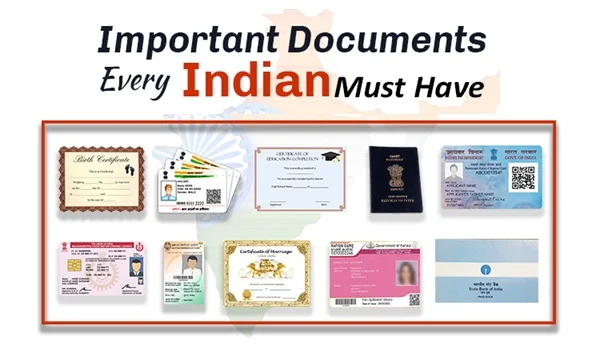
Identity documents are among the most frequently required records for everyday legal and financial activities.
Families should keep copies and, where appropriate, secure digital records of documents such as Aadhaar, PAN, passports and voter identification documents. Driving licences may also be relevant for individual family members.
Address-related records can include utility bills, rental agreements and other officially accepted proof of residence. It is useful to keep documents updated whenever there is a permanent change of address or other important personal information.
Original identity documents should be stored securely, while copies can be kept separately for routine requirements.
Birth Certificates
A birth certificate is an important record of a person’s date and place of birth and parentage. It can be required for school admission, passports, government services and other official processes.
Parents should keep the birth certificates of children safely from an early age. Adults should also preserve their own birth records where available.
If there are differences in names or dates of birth across important documents, the issue should be addressed rather than allowing inconsistent records to continue.
Marriage Certificate
A marriage certificate is an important legal record for married couples. It may be required for various administrative, financial, immigration, insurance and inheritance-related processes.
Families should retain the original certificate and keep secure copies. If the marriage was registered under the applicable law, the registration record should also be preserved.
This document can become particularly important when a spouse needs to establish the legal relationship for a claim, application or property-related matter.
Property Documents
Property papers are among the most valuable documents many Indian families possess. They should receive special attention because losing them can create significant difficulties.
Depending on the property and transaction, important records may include the sale deed, conveyance deed, gift deed, partition deed, registration documents, mutation records and relevant property-tax records.
For home loans, families should also preserve loan agreements, repayment records and documents showing release of the lender’s charge after the loan has been fully settled.
Property documents should preferably be kept in a secure physical location, with properly protected digital copies as a backup.
Will and Estate Planning Documents
A Will allows a person to express how their assets should be dealt with after death, subject to applicable law. Families with property, investments, businesses or other significant assets should consider appropriate estate planning.
If a person has prepared a Will, the original should be stored securely and its location should be known to a trusted person. Supporting documents relating to assets and liabilities should also be organised.
A Will should not simply be created and forgotten. Major changes in family circumstances, ownership or financial arrangements may make it appropriate to review estate planning documents.
Insurance Policies
Insurance documents are important because family members may need them when making a claim.
Families should maintain records of life insurance, health insurance, motor insurance, home insurance and other relevant policies. Important details include the policy number, insurer, coverage, nominee information, renewal dates and premium records.
It is particularly useful for the family to know where life insurance documents are stored. A policy that beneficiaries cannot easily identify may create unnecessary delays when a claim needs to be made.
Bank and Investment Records
Bank account information and investment records should also be organised carefully.
Relevant documents may include bank account statements, fixed-deposit records, demat account information, mutual fund statements, bonds, pension-related records and other investment documents.
Nominee information should be reviewed periodically. Families should also maintain a clear record of financial institutions where accounts or investments are held.
For security reasons, sensitive login passwords, PINs and authentication codes should not be stored casually alongside ordinary financial records. Instead, families should use secure password-management arrangements where appropriate.
Loan and Liability Documents
Families often focus on assets but overlook documents relating to liabilities.
Home loans, personal loans, education loans, vehicle loans and other borrowings can create important legal and financial obligations. Keep copies of loan agreements, repayment schedules, statements and correspondence relating to outstanding liabilities.
Once a loan is completely repaid, documents confirming closure should also be preserved. These records can be useful if questions arise later about whether an obligation has actually been settled.
Educational and Professional Certificates
Educational certificates may be needed throughout a person’s career. Degree certificates, school certificates, mark sheets, professional qualifications and other important academic records should be protected from damage or loss.
Where institutions provide official digital versions, families can maintain those records as an additional backup.
Professional licences or registrations should also be preserved where they are relevant to a person’s occupation.
Vehicle Documents
Vehicle owners should maintain important records such as the registration certificate, insurance documents, pollution-under-control certificate and purchase-related papers.
For financed vehicles, loan and hypothecation-related records may also be relevant. After the loan is cleared, documentation confirming removal of the financier’s interest should be retained.
Keeping these records together makes insurance renewals, ownership transfers and other vehicle-related processes easier.
Family Settlement and Inheritance Records
Families that have divided or inherited property should carefully preserve documents connected with the arrangement.
These may include partition deeds, family settlement agreements, succession-related documents, gift deeds, probate or other court orders where applicable, and records establishing ownership.
Such papers can become especially important when property is transferred to the next generation or when questions arise among family members about ownership.
Court and Legal Documents
If a family member has been involved in a legal proceeding, important court records should not be casually discarded.
Depending on the matter, these may include court orders, judgments, agreements, notices, affidavits and other relevant legal documents.
Keep documents in chronological order and separate closed matters from ongoing cases. If professional legal advice was involved, retaining relevant correspondence and final advice may also be useful.
How to Store Important Legal Documents Safely
Simply collecting documents is not enough. They should be organised so that the right person can find them when necessary.
A practical system can include:
- A secure physical folder for essential originals
- A separate location for backup copies
- Encrypted or otherwise protected digital storage
- Clearly named digital files
- A simple inventory of important documents
- Regular checks for expired or outdated records
- Limited access to highly sensitive information
For documents that are difficult or expensive to replace, families should consider an additional backup arrangement rather than relying on a single physical copy.
Keep a Family Document Inventory
A simple document inventory can make family record management much easier. It can list the document type, whose name it is in, where the original is stored and whether a digital backup exists.
The inventory itself should not contain unnecessary sensitive information. It is mainly intended to help authorised family members understand what records exist and where they can be found.
Review the inventory after major events such as marriage, birth of a child, purchase of property, death of a family member, relocation or significant financial changes.
What Families Should Not Do
Some common habits can put important records at risk. Families should avoid keeping all originals in one easily accessible location, throwing away old legal documents without checking their importance, or relying entirely on photographs stored on a phone.
They should also avoid sharing sensitive documents through unsecured channels without considering privacy and security.
When an original document is submitted to a bank, government office, court or another institution, it is sensible to understand whether it will be returned and to retain appropriate evidence of submission.
Final Thoughts
Important legal documents are not merely pieces of paperwork. They provide evidence of identity, relationships, ownership, financial rights and legal arrangements. Keeping them organised can make everyday administrative work easier and can become extremely valuable during emergencies or major family transitions.
Every Indian family should periodically review its important records, protect originals, maintain secure backups and ensure that trusted family members know how to locate essential documents when genuinely necessary. For complicated matters involving property, inheritance, taxation or legal rights, professional advice can help ensure that the family’s documents are properly prepared and maintained.