
Indoor air quality plays an important role in your health and comfort. Since many people spend a large part of their day indoors, the air inside your home should be as clean as possible. Dust, pet dander, mold, smoke, and household chemicals can reduce air quality and may cause allergies, breathing problems, or unpleasant odors.
The good news is that you don’t need expensive equipment to make a difference. Simple daily habits and regular home maintenance can help improve the air you breathe.
Why Indoor Air Quality Matters
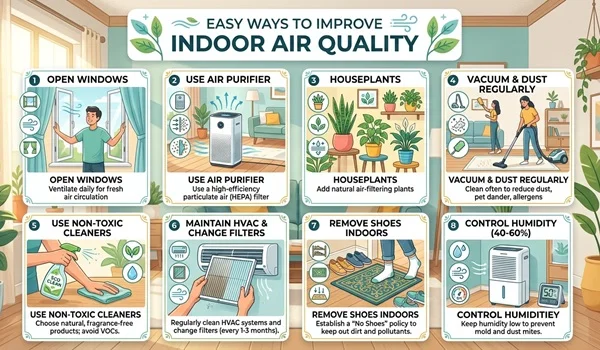
Clean indoor air can help you:
- Breathe more comfortably.
- Reduce allergy symptoms.
- Minimize dust and odors.
- Improve sleep quality.
- Create a healthier living environment.
- Support overall well-being.
Poor indoor air quality can affect anyone, especially children, older adults, and people with asthma or allergies.
- Open Windows for Fresh Air
One of the easiest ways to improve indoor air is to let fresh air circulate.
Open windows and doors when outdoor conditions are suitable to:
- Remove stale air.
- Reduce indoor pollutants.
- Improve ventilation.
- Lower indoor humidity.
Even opening windows for 15 to 30 minutes each day can help.
- Keep Your Home Clean
Dust and dirt can collect quickly inside a home.
Regularly:
- Vacuum carpets and rugs.
- Sweep and mop floors.
- Dust furniture.
- Clean curtains and blinds.
- Wash bedding frequently.
Using a vacuum with a HEPA filter can help capture smaller particles.
- Change Air Filters Regularly
If your home has a heating or cooling system, replace or clean the air filters according to the manufacturer’s recommendations.
Clean filters help:
- Improve airflow.
- Reduce dust.
- Capture airborne particles.
- Keep the system running efficiently.
- Control Indoor Humidity
Too much moisture can encourage mold and mildew growth.
You can help control humidity by:
- Fixing water leaks quickly.
- Using exhaust fans in bathrooms and kitchens.
- Running a dehumidifier if needed.
- Drying wet areas promptly.
Keeping humidity at a comfortable level can reduce moisture-related problems.
- Use Exhaust Fans While Cooking
Cooking can release smoke, grease, and tiny particles into the air.
Turn on the kitchen exhaust fan while:
- Frying food.
- Boiling water.
- Grilling indoors.
- Cooking with strong spices.
If possible, vent the fan to the outside.
- Avoid Smoking Indoors
Tobacco smoke contains many harmful substances that can remain in indoor air and on surfaces.
Keeping your home smoke-free helps improve air quality for everyone.
- Add Indoor Plants Carefully
Some indoor plants can make your home feel fresher and more inviting.
However:
- Avoid overwatering plants.
- Remove dead leaves.
- Watch for mold in the soil.
Plants should complement—not replace—good ventilation and cleaning.
- Reduce the Use of Strong Chemicals
Some cleaning products, paints, and air fresheners release chemicals into the air.
Choose products that:
- Have low odor.
- Are used according to the instructions.
- Are stored safely after use.
Whenever possible, keep rooms well ventilated while using these products.
- Fix Water Leaks Quickly
Water leaks can lead to mold growth if left untreated.
Check regularly for leaks around:
- Sinks.
- Toilets.
- Pipes.
- Roofs.
- Windows.
Repairing leaks early helps maintain healthier indoor air.
- Clean Air Conditioner and Fan Units
Dust can build up inside cooling equipment.
Regularly:
- Clean fan blades.
- Wipe air vents.
- Service air conditioners.
- Remove dust from filters.
Proper maintenance improves both airflow and air quality.
- Keep Pets Clean
If you have pets:
- Brush them regularly.
- Bathe them as recommended.
- Wash pet bedding.
- Vacuum pet hair frequently.
This helps reduce pet dander inside the home.
- Reduce Clutter
Clutter collects dust and makes cleaning more difficult.
Try to:
- Organize storage areas.
- Remove unused items.
- Keep floors clear.
- Store seasonal items properly.
A tidy home is generally easier to keep clean.
- Wash Curtains, Cushions, and Soft Furnishings
Fabric surfaces can trap:
- Dust.
- Pet hair.
- Allergens.
- Odors.
Cleaning them regularly helps improve indoor air quality.
- Check for Mold Regularly
Inspect areas that are more likely to stay damp, including:
- Bathrooms.
- Basements.
- Laundry rooms.
- Under sinks.
- Around windows.
Address moisture problems promptly if you notice mold.
- Consider an Air Purifier
An air purifier may help reduce airborne particles such as dust, pollen, and pet dander, depending on the model and filter used.
When choosing one, consider:
- Room size.
- Filter type (such as HEPA filters).
- Maintenance requirements.
- Noise level.
An air purifier works best alongside good cleaning and ventilation habits.
Signs of Poor Indoor Air Quality
Your home may need attention if you notice:
- Persistent dust.
- Musty odors.
- Frequent allergy symptoms indoors.
- Condensation on windows.
- Mold growth.
- Excess humidity.
- Poor ventilation.
Finding and addressing the cause is often more effective than simply masking the symptoms.
Tips to Maintain Healthy Indoor Air
Follow these simple habits:
- Open windows regularly when weather and outdoor air quality allow.
- Replace HVAC filters on schedule.
- Clean your home weekly.
- Keep humidity under control.
- Vacuum frequently.
- Repair leaks promptly.
- Use exhaust fans while cooking and bathing.
- Avoid smoking indoors.
Consistency is key to maintaining better air quality.
Common Mistakes to Avoid
Many homeowners unintentionally reduce indoor air quality by:
- Ignoring mold or water damage.
- Forgetting to replace air filters.
- Blocking air vents with furniture.
- Using too many scented products.
- Skipping regular cleaning.
- Allowing excess humidity to build up.
Avoiding these habits can help keep your indoor air cleaner.
Indoor Air Quality Improvement Checklist
| Task | Benefit |
| Open windows daily | Improves ventilation |
| Vacuum and dust regularly | Removes dust and allergens |
| Replace HVAC filters | Improves airflow and filtration |
| Control humidity | Reduces mold risk |
| Use kitchen exhaust fans | Removes cooking fumes |
| Repair leaks quickly | Prevents moisture damage |
| Clean air conditioner | Improves system performance |
| Wash soft furnishings | Removes trapped dust and allergens |
| Reduce clutter | Makes cleaning easier |
| Use an air purifier if needed | Helps reduce airborne particles |
Frequently Asked Questions
How often should I replace my air filter?
It depends on your HVAC system, filter type, and home environment. Follow the manufacturer’s recommendations, and check filters more often if you have pets or live in a dusty area.
Can indoor plants improve air quality?
Indoor plants can make a space feel more pleasant, but they should not be relied upon as the primary way to improve air quality. Good ventilation, moisture control, and regular cleaning are more effective.
Is an air purifier worth buying?
An air purifier can be helpful for reducing certain airborne particles, especially in homes with allergies, pets, or high dust levels. It works best as part of an overall indoor air quality plan.
What is the biggest cause of poor indoor air quality?
Common causes include poor ventilation, dust buildup, excess moisture, mold, smoke, pet dander, and pollutants from household products.
Final Thoughts
Improving indoor air quality doesn’t have to be difficult or expensive. Simple habits such as opening windows, cleaning regularly, replacing air filters, controlling humidity, and fixing leaks can make a noticeable difference. By taking small steps throughout the year, you can create a cleaner, fresher, and healthier home for you and your family.