
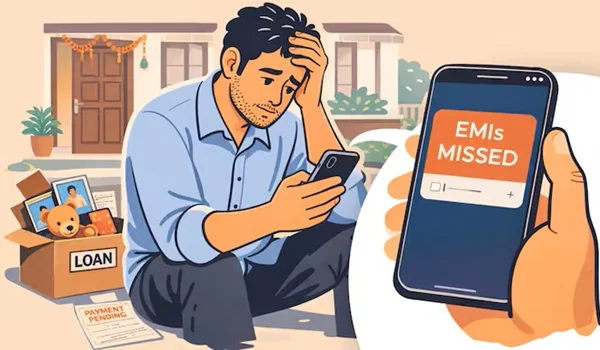
Missing a loan EMI (Equated Monthly Installment) can happen for many reasons, such as temporary financial difficulties, unexpected expenses, or simply forgetting the payment date. While one missed payment may not immediately lead to serious consequences, ignoring it can result in additional charges, affect your credit profile, and make borrowing more difficult in the future.
Understanding what happens after a missed EMI can help you take quick action and reduce the financial impact.
What Is a Loan EMI?
An EMI is the fixed amount you pay to your lender every month until your loan is fully repaid. Each EMI usually includes:
- A portion of the loan principal
- Interest on the outstanding loan amount
EMIs are commonly used for:
- Home loans
- Personal loans
- Car loans
- Education loans
- Business loans
Paying your EMI on time helps keep your loan account in good standing.
What Happens When You Miss an EMI?
The exact process varies by lender and loan agreement, but the following may happen.
- Late Payment Charges
Most lenders charge a late payment fee if you miss the due date.
The amount depends on:
- Your loan agreement
- The type of loan
- The number of days the payment is overdue
These charges increase the overall cost of your loan.
- Interest on the Overdue Amount
In addition to late fees, lenders may charge extra interest on the overdue installment until it is paid.
The longer the payment remains unpaid, the higher the additional cost may become.
- Reminder Calls and Messages
Lenders often send:
- SMS reminders
- Email notifications
- Phone calls
These reminders encourage borrowers to make the overdue payment as soon as possible.
- Impact on Your Credit History
If the missed payment remains unpaid for long enough to be reported under the lender’s reporting practices, it may affect your credit history.
A weaker credit profile can make it more difficult to:
- Get future loans
- Qualify for lower interest rates
- Obtain higher credit limits
Paying on time consistently helps maintain a healthy credit record.
- Loan Default Risk
Missing multiple EMIs without resolving the issue can eventually lead to loan default, depending on your loan terms and the lender’s policies.
Loan default may result in:
- Collection efforts
- Legal action, where permitted by law
- Recovery proceedings
- Repossession of secured assets for secured loans, subject to applicable laws and the loan agreement
What Should You Do If You Miss an EMI?
Taking action quickly can reduce additional costs.
Contact Your Lender
Inform your lender as soon as possible.
They may discuss options such as:
- A revised payment date
- Temporary repayment arrangements
- Loan restructuring, where available
Ignoring the problem usually makes it harder to resolve.
Pay the EMI as Soon as Possible
The sooner you make the payment, the less you may pay in additional charges and interest.
Understand the Charges
Ask your lender about:
- Late payment fees
- Additional interest
- Updated outstanding amount
Knowing the total amount due helps you plan your payment.
Can One Missed EMI Affect Your Credit?
A single missed EMI does not always have the same outcome in every situation. The impact depends on factors such as:
- How long the payment remains overdue
- The lender’s reporting practices
- Your previous repayment history
However, repeated missed payments or long delays are generally more likely to have a negative effect on your credit profile.
What If You Cannot Afford the EMI?
If you’re facing genuine financial difficulties, don’t wait until several payments are missed.
Speak with your lender to discuss possible solutions, which may include:
- Extending the loan tenure
- Temporary repayment relief, if offered
- Loan restructuring, where eligible
- Adjusting the repayment schedule
The options available vary by lender and loan type.
Secured vs. Unsecured Loans
The consequences may differ depending on the type of loan.
Secured Loans
Examples include:
- Home loans
- Car loans
- Loans backed by collateral
If payments remain unpaid for an extended period, the lender may begin recovery procedures involving the pledged asset, subject to the loan agreement and applicable laws.
Unsecured Loans
Examples include:
- Personal loans
- Some education loans
Since there is no collateral, lenders may use other recovery methods permitted under the loan agreement and applicable regulations.
Tips to Avoid Missing EMIs
You can reduce the chances of missing payments by:
- Setting payment reminders.
- Enabling automatic payments from your bank account.
- Keeping enough balance before the due date.
- Maintaining an emergency fund.
- Borrowing only what you can comfortably repay.
- Tracking all your monthly bills.
Common Mistakes to Avoid
Many borrowers make these mistakes:
- Ignoring lender calls or emails.
- Delaying payment for several months.
- Borrowing another high-interest loan without understanding the costs.
- Missing multiple EMIs without informing the lender.
- Assuming a missed payment will not have any consequences.
Simple EMI Management Checklist
| Task | Why It Matters |
| Know your EMI due date | Helps avoid missed payments |
| Enable auto-debit | Reduces the risk of forgetting |
| Keep enough account balance | Prevents payment failure |
| Monitor your loan account | Detect issues early |
| Contact the lender if needed | May help you explore available options |
| Keep an emergency fund | Helps cover unexpected financial difficulties |
Frequently Asked Questions
How many days late can an EMI be?
The due date and any grace period depend on your loan agreement and the lender’s policies. Check your loan documents or contact your lender for the exact terms.
Will I have to pay extra if I miss an EMI?
In many cases, yes. Lenders may charge late payment fees and additional interest on overdue amounts, depending on your loan agreement.
Can I pay a missed EMI later?
Yes, in many cases you can pay the overdue installment later. However, paying sooner can help reduce additional charges and limit any potential impact on your credit profile.
What should I do if I’m unable to make my EMI payment?
Contact your lender immediately. They may explain the available options based on your circumstances and the terms of your loan.
Final Thoughts
Missing a loan EMI can lead to extra costs and, if left unresolved, may affect your credit profile and your ability to borrow in the future. The best approach is to act quickly by making the overdue payment as soon as possible and contacting your lender if you’re facing financial difficulties. Planning your finances, setting payment reminders, and borrowing within your repayment capacity can help you avoid missed EMIs and keep your loan on track.