
Staying active does not always require a gym membership, expensive equipment or a strict workout schedule. For people managing busy Indian routines, everyday activities such as walking, climbing stairs, doing household chores, playing with children and exercising at home can provide practical opportunities to move more.
The most useful approach is to make physical activity part of your normal day rather than treating exercise as something that can happen only inside a gym.
Walk Whenever Practical
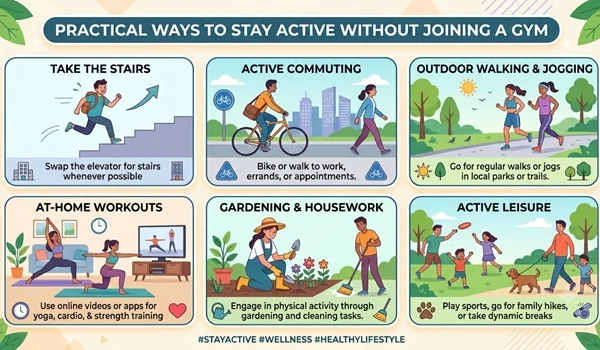
Walking is one of the simplest ways to increase daily physical activity. You can take a short walk in the morning, after work, during a break or after dinner.
For short-distance errands, consider walking instead of taking a vehicle when the weather, distance and surroundings make it practical.
You can also divide your walking into several shorter sessions if finding time for one long walk is difficult.
Take the Stairs
Using stairs instead of lifts or escalators can add more movement to your day.
Start gradually if you are not accustomed to climbing stairs. You do not need to take several flights at once. Even incorporating stairs into certain parts of your routine can be a useful change.
People with health or mobility concerns should choose activities appropriate for their individual circumstances.
Exercise at Home
A home workout can be completed with very little space and no specialised equipment.
Depending on your fitness level, simple movements such as squats, wall push-ups, lunges, step-ups and gentle mobility exercises can be included.
You can begin with a short routine and gradually increase the duration or difficulty as your fitness improves.
Take Regular Movement Breaks
Long periods of sitting are common among office workers, students and people working from home.
Instead of remaining seated for several hours continuously, take short movement breaks. Stand up, walk around the room, stretch or perform a few light movements between tasks.
If you work at a desk, setting a reminder can help make these breaks more consistent.
Walk During Phone Calls
Phone conversations can provide an easy opportunity to move.
When a call does not require you to sit at a desk, walk around your home, office or another suitable location while talking.
Small changes like this can add more movement without requiring additional time specifically for exercise.
Make Household Chores More Active
Many household activities involve physical movement. Sweeping, mopping, gardening, cleaning, organising storage and washing vehicles can keep you moving.
These activities should not necessarily replace planned physical exercise, but they can help reduce inactivity during the day.
Dance at Home
Dancing is a simple way to make physical activity enjoyable.
Put on some music and dance for a few songs when you have free time. You can do it alone or with family members.
Because it feels more like recreation than formal exercise, dancing can be easier for some people to maintain regularly.
Play Outdoor Games
Sports and outdoor games can make staying active more enjoyable, particularly for families.
Cricket, badminton, football, cycling and other recreational activities can provide opportunities to move while spending time with friends or family.
The activity can be adjusted according to age, fitness level and ability.
Spend Active Time With Children
Playing with children can be a practical way for parents and other family members to become more active.
Outdoor games, walking, cycling and simple physical activities can combine family time with movement.
It can also encourage children to develop positive attitudes towards physical activity.
Try Yoga and Stretching
Yoga and stretching can be done at home with limited space.
Gentle movements may help with flexibility, mobility and relaxation. Beginners should start with basic exercises and avoid forcing the body into uncomfortable positions.
If you have an injury or a health condition, choose exercises appropriate for you and seek professional guidance when necessary.
Make Weekend Plans More Active
Weekends often provide more flexibility for physical activity.
Instead of spending the entire day sitting indoors, consider going for a walk, visiting a park, cycling, gardening or exploring a local area on foot.
Family outings can also be planned around activities that involve movement.
Reduce Unnecessary Sitting
You do not need to turn every moment into a workout. Simply look for opportunities to sit less.
Stand while doing certain tasks, walk around during breaks and avoid remaining in one position for unnecessarily long periods.
These small changes can make an otherwise sedentary day more active.
Set Realistic Goals
Avoid starting with an exercise target that is difficult to maintain.
A beginner might start by taking a daily walk or completing a short home workout several days a week. Once the routine becomes comfortable, activity can gradually increase.
Setting achievable goals can make it easier to stay consistent.
Choose Activities You Enjoy
There is no single exercise that everyone has to follow.
Some people enjoy walking, while others prefer dancing, cycling, yoga, swimming, sports or home workouts. Choosing an activity you genuinely enjoy can make it easier to continue.
You can also combine different activities to prevent your routine from becoming repetitive.
Stay Active Even on Busy Days
Some days will be too busy for a full workout. Instead of giving up completely, look for smaller opportunities to move.
A short walk, a few stretches, household chores or taking the stairs can still keep you moving. The goal is to build a lifestyle where activity happens regularly rather than depending entirely on formal workouts.
Build the Habit Gradually
Trying to change your entire lifestyle overnight can be difficult.
Start with one or two simple changes and give yourself time to develop them into habits. Once they become part of your normal routine, introduce another activity.
Consistency is generally more sustainable than following an extremely demanding exercise plan for a short period.
Conclusion
You do not need to join a gym to become more physically active. Walking, taking stairs, exercising at home, dancing, doing household chores, playing outdoor games and taking regular movement breaks can all fit into an ordinary daily routine.
The best approach is to choose activities that match your schedule, fitness level and interests. Start small, stay consistent and gradually increase your activity as your routine becomes more comfortable.